
UGC Ads Cost and Testing Benchmarks
What this page covers
UGC Ads Cost and Testing Benchmarks
For gaming brands, creator-led UGC works best when it is planned from the start as both organic content and a paid asset. Early creator posts can then act as testing inputs, not just final deliverables.
Cost and testing decisions improve when UGC is managed like a performance channel. Review paid results often, test messaging quickly, and shift budget toward the creatives and placements that produce stronger response.
In brief
- Treat creator-led UGC as a repeatable performance channel with structured testing, creative refreshes, and a clear path to scaling what performs.
- Build paid usage rights or whitelisting into the plan early so strong organic creator content can move into paid media without delays.
- Keep testing across formats and placements, including newer options when relevant, instead of depending on one familiar ad setup.
What to do
A practical UGC ads approach starts by treating each creator engagement as a potential paid asset. When usage rights or whitelisting are planned upfront, organic posts can become early indicators of which concepts deserve paid support.
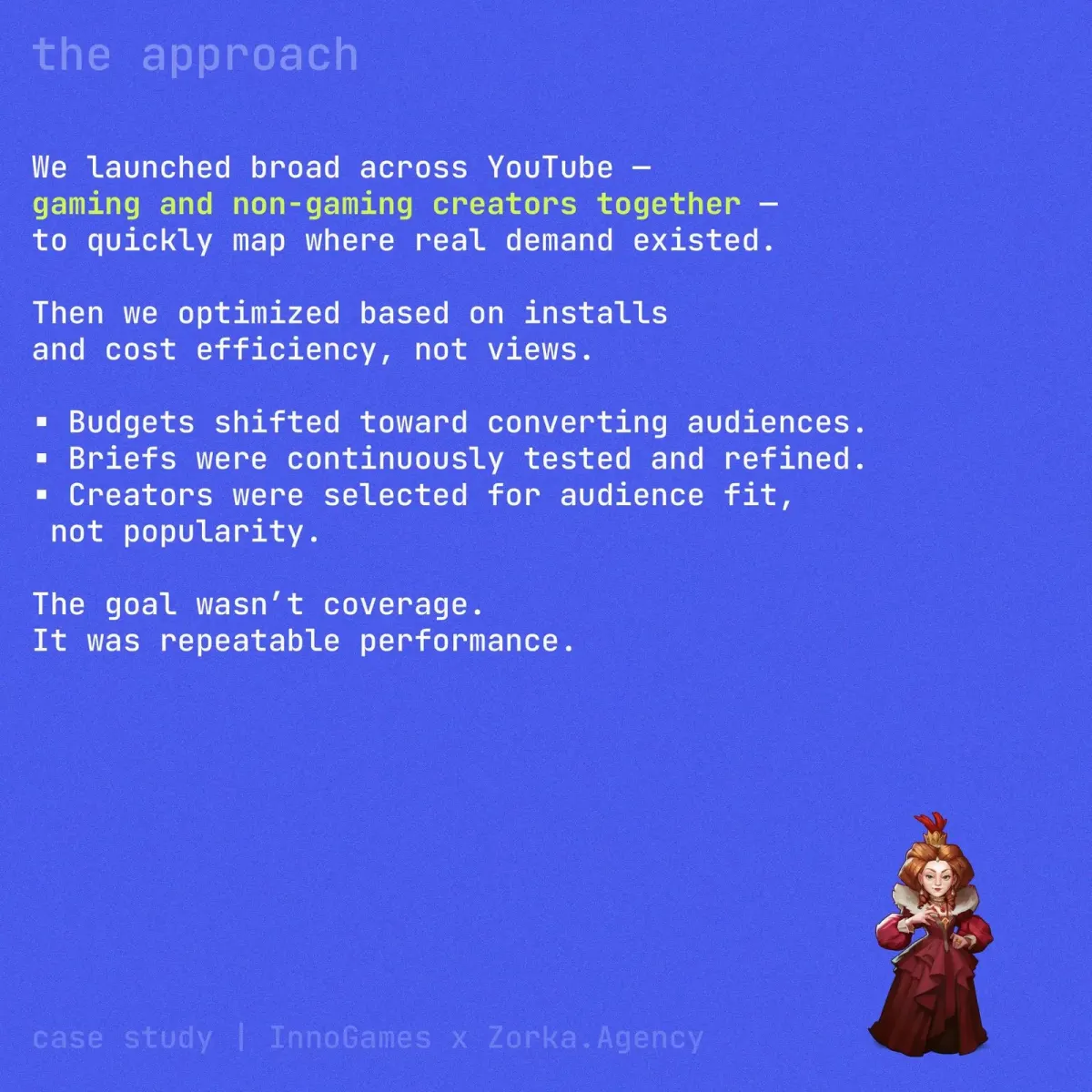
From there, creator-led UGC can support paid social as a flexible acquisition channel for gaming brands. The value is not just more content. It is the ability to test hooks quickly, compare audience response, and move spend toward the strongest creative.
This works best when teams move beyond one-off creator activations and manage UGC with performance discipline. Ongoing testing, creative iteration, and regular review help make creator content a more scalable part of the media mix.
What to keep in mind
Testing matters because formats, placements, and audience behavior keep changing. Zorka.Agency highlights continued experimentation with newer options such as YouTube Shorts while staying open to testing new approaches.
Creative testing can produce measurable gains when ideas are tied to clear performance signals. In one case-study excerpt, an interactive progress bar is credited with doubling installs and cutting cost per install by 50 percent, along with more than 1.5 million views.
Cost benchmarks also need to reflect real delivery conditions. Zorka.Agency points to factors such as effective cost per qualified view, premium geos, watch time, hybrid deal structures, and bundled creator deliverables when evaluating UGC ad costs.